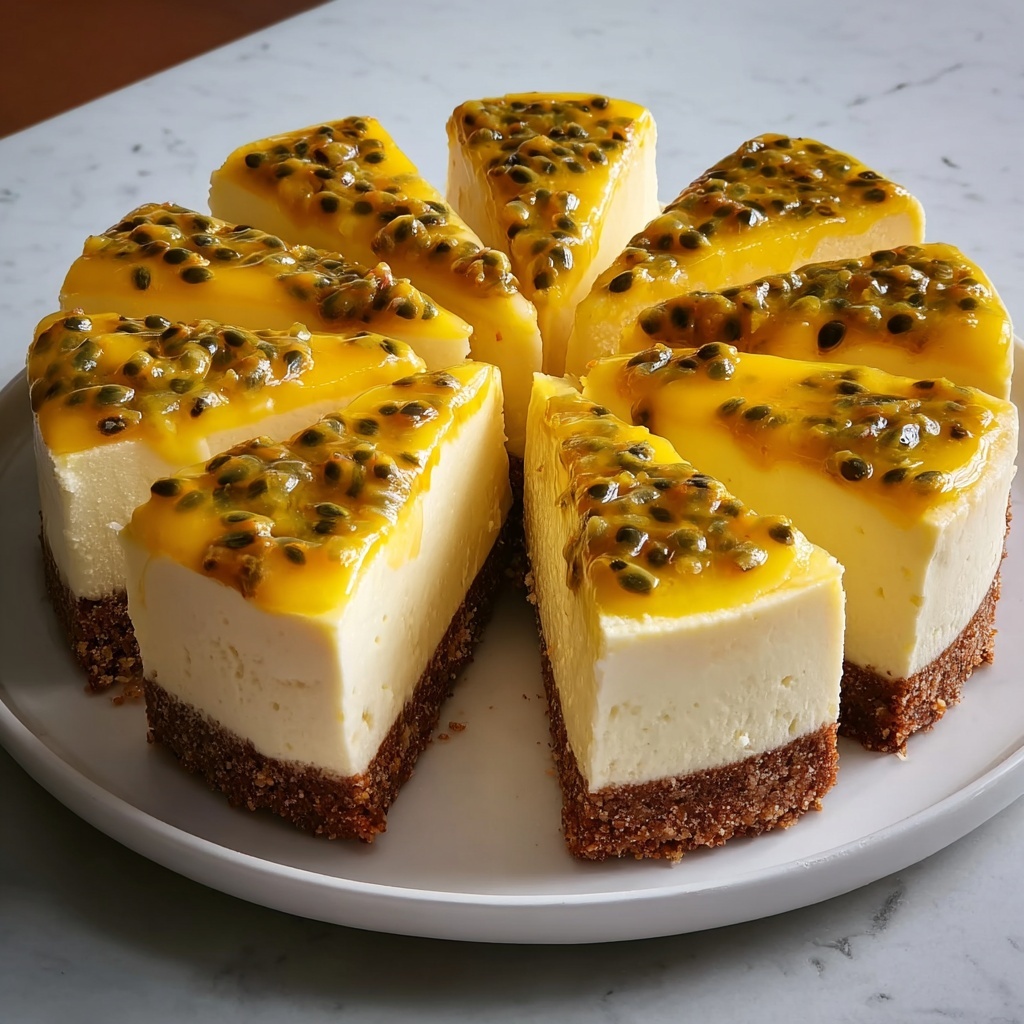
If you’re searching for a dessert that perfectly balances tangy tropical flavor with a creamy, dreamy texture, this Passionfruit Cheesecake Recipe is an absolute must-try. The luscious passionfruit pulp brings a vibrant punch that cuts through the richness of the smooth cream cheese, while the buttery biscuit crust adds the ideal crunch. With simple, wholesome ingredients, this dessert feels like a little indulgence from paradise in every bite. Whether it’s a special occasion or just a treat to brighten up your day, this cheesecake promises to delight your taste buds and impress anyone lucky enough to share it.
Ingredients You’ll Need
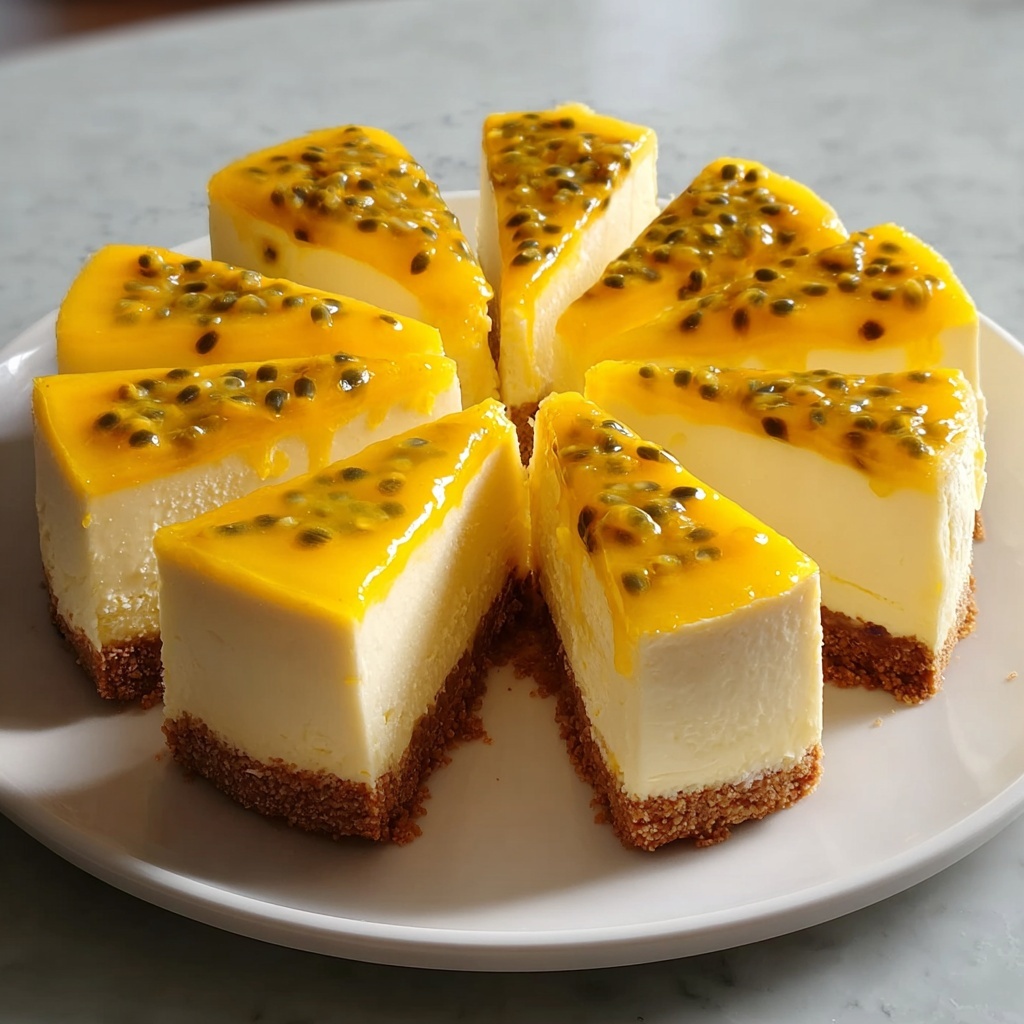
The magic of this Passionfruit Cheesecake Recipe lies in the simplicity and quality of its ingredients. Each component plays a key role in building the cheesecake’s texture, taste, and stunning appearance, making the recipe approachable yet extraordinarily delicious.
- 200 grams digestive biscuits (or graham crackers): The base that gives a lovely buttery crunch and sturdy foundation for the cheesecake.
- 100 grams unsalted butter, melted: Binds the biscuit crumbs together and adds richness without overpowering the flavors.
- 400 grams cream cheese, softened: The creamy heart of the cheesecake, providing that signature smooth and tangy profile.
- 150 grams granulated sugar: Sweetens the filling just enough to balance the tartness of the passionfruit.
- 200 ml sour cream: Adds an extra layer of creaminess and a slight tang that enhances the overall flavor.
- 3 large eggs: Essential for structure and that silky texture we all adore in cheesecakes.
- 1 teaspoon vanilla extract: Brings a warm, aromatic note that harmonizes with the tropical passionfruit.
- 100 ml passionfruit pulp (fresh or canned): The star ingredient providing vibrant flavor and beautiful pops of tartness.
- 1 tablespoon cornflour (optional): Helps stabilize the filling and ensure a perfect set without compromising creaminess.
- Fresh passionfruit seeds (for garnish): Adds a stunning visual touch and bursts of flavor that elevate presentation and taste.
How to Make Passionfruit Cheesecake Recipe
Step 1: Prepare Your Oven and Crust
Start by preheating your oven to 180°C (350°F) so it’s ready as soon as your crust is assembled. Crush your digestive biscuits into fine crumbs—using a food processor makes this a breeze, but a ziplock bag and rolling pin work just as well. Combine the crumbs with melted butter until the mixture holds together like damp sand. Press this firmly into the bottom of your 9-inch springform pan to form an even layer, then bake for about 10 minutes to set the crust. Let it cool completely to prevent a soggy bottom later on—this step ensures a perfect crunch in every slice.
Step 2: Create the Creamy Filling
In a large mixing bowl, beat the softened cream cheese until it’s beautifully smooth and free of lumps—that’s the foundation of a velvety texture. Gradually add the granulated sugar and continue mixing to combine, allowing the sugar to dissolve well for a clean sweetness. Next, incorporate sour cream, eggs, and vanilla extract, mixing just until everything comes together. Be gentle here; overmixing can add air bubbles and affect the texture. The key to that luscious cheesecake bite is to blend ingredients just enough.
Step 3: Infuse with Passionfruit
Now, delicately fold in your passionfruit pulp, whether fresh or canned. This infusion of tropical brightness brings the cheesecake to life. Adding the passionfruit at this stage helps keep its vibrant flavor and gives the filling a lovely marbled or speckled look, depending on how much you fold. If you opt to use cornflour, add it now to stabilize the filling, ensuring your cheesecake sets beautifully without cracking.
Step 4: Bake Your Cheesecake to Perfection
Pour the filling over the cooled crust and smooth the top with a spatula. Bake for 50-60 minutes—your target is for the edges to be set and slightly golden, while the center still jiggles the tiniest bit, signaling a creamy center. Once baked, turn off the oven and leave the cheesecake inside for another hour. This gentle cooling phase helps prevent cracks and promotes an even texture. Afterward, bring it to room temperature before chilling it in the fridge for at least 4 hours or overnight to fully set and develop flavor.
How to Serve Passionfruit Cheesecake Recipe
Garnishes
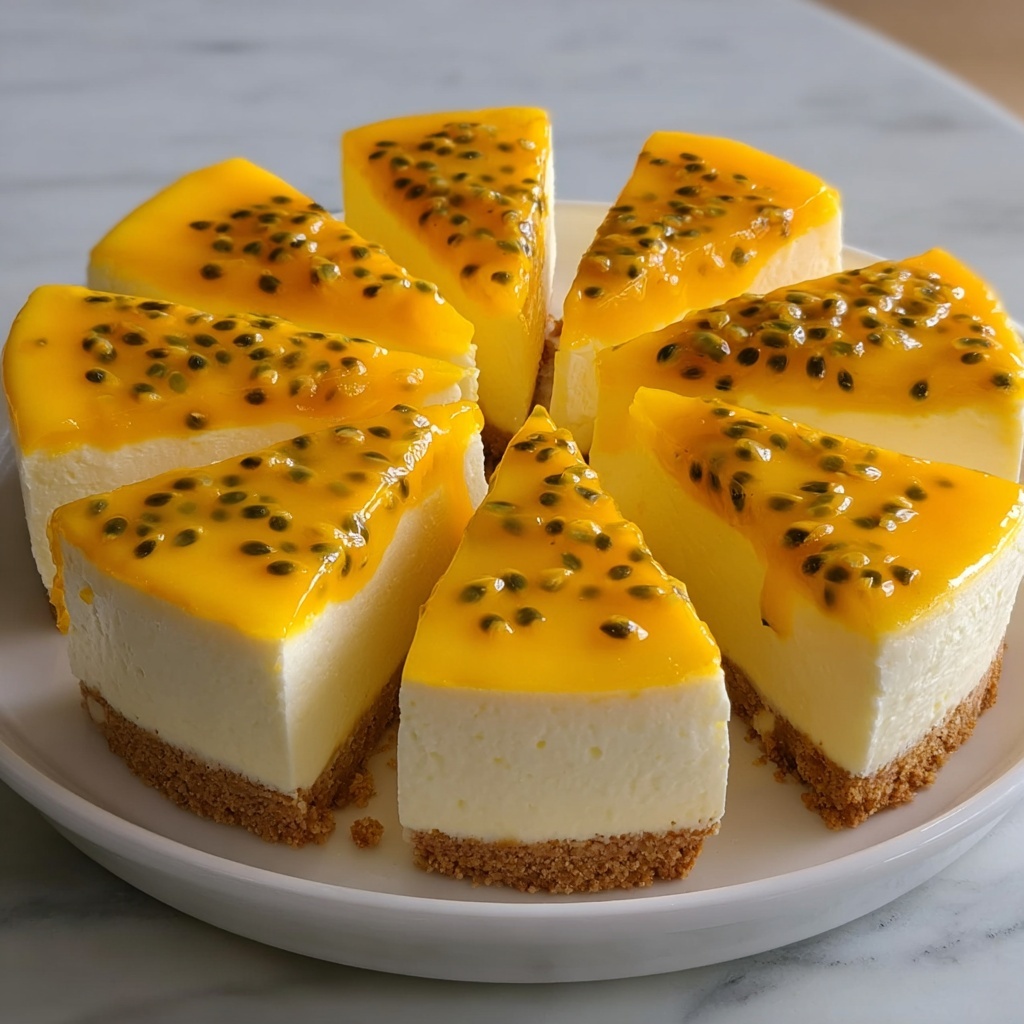
Garnishing your Passionfruit Cheesecake Recipe with fresh passionfruit seeds not only adds a delightful crunch but also a burst of tang that complements the silky filling. You can also add a sprinkle of finely grated lemon zest or a few sprigs of mint for that extra pop of freshness and color, making your dessert even more irresistible at first glance.
Side Dishes
This cheesecake pairs beautifully with a light drizzle of passionfruit syrup or fresh berries to brighten the palate. For a more indulgent experience, serve alongside homemade whipped cream or coconut sorbet, which echo the tropical theme and add lovely contrasting textures. These side touches elevate the dessert without stealing the spotlight from the star, your passionfruit cheesecake.
Creative Ways to Present
Consider serving individual portions in clear glasses or small jars for a fun, modern twist that shows off the cheesecake’s creamy layers and vibrant passionfruit swirls. Alternatively, dust the top lightly with toasted coconut flakes or finely chopped pistachios for a little crunch and color contrast. Whether plated with elegance or in casual style, presentation makes this Passionfruit Cheesecake Recipe unforgettable.
Make Ahead and Storage
Storing Leftovers
Once refrigerated, your Passionfruit Cheesecake Recipe will stay fresh for up to 4 days. Cover the cheesecake tightly with plastic wrap or keep it in an airtight container to prevent it from absorbing other fridge odors. Proper storage keeps the texture creamy and flavors vibrant for whenever you’re ready to indulge again.
Freezing
Cheesecake freezes wonderfully if you want to make it ahead of time or save leftovers long-term. Wrap the cheesecake tightly in plastic wrap, then a layer of foil to prevent freezer burn. When wrapped well, it’ll keep for up to 2 months without losing its luscious texture or flavor. Thaw overnight in the fridge before serving to retain that perfect creamy consistency.
Reheating
Since cheesecake is best enjoyed chilled, reheating is generally not recommended. If you prefer a softer texture, you can let slices come to room temperature for about 15-20 minutes before serving. This subtle warming helps enhance the flavors without sacrificing the rich mouthfeel characteristic of this Passionfruit Cheesecake Recipe.
FAQs
Can I use frozen passionfruit pulp for the cheesecake?
Absolutely! Frozen passionfruit pulp works just as well as fresh or canned—it maintains the tangy flavor and adds the essential brightness your cheesecake needs. Just be sure to thaw it completely and drain any excess liquid before folding it in, so your filling doesn’t become too runny.
Is it necessary to bake the crust before adding the filling?
Baking the crust is highly recommended as it helps the base set firmly, preventing it from becoming soggy once the filling is added. It also enhances the buttery flavor and adds a subtle toasted note that complements the creamy cheesecake perfectly.
Can I substitute sour cream with Greek yogurt?
Yes, Greek yogurt can be a suitable substitute for sour cream if you’re looking for a slightly tangier flavor and lower fat content. Just swap it in equal amounts, but keep in mind that it may alter the final texture slightly, resulting in a cheesecake that’s a bit lighter and less rich.
What should I do if my cheesecake cracks on top?
Cracks can happen if the oven temperature is too high or if the cheesecake is overbaked. To minimize this, bake your Passionfruit Cheesecake Recipe at the correct temperature and avoid opening the oven door too often. Cooling the cheesecake slowly in the turned-off oven for an hour also helps prevent cracks by letting it set gently.
How do I know when the cheesecake is perfectly baked?
The edges should appear set and slightly golden, while the center should still have a gentle jiggle when you give the pan a slight shake. This wobble means the middle is creamy and not overcooked—after cooling and chilling, it will firm up nicely for that ideal cheesecake texture.
Final Thoughts
Making this Passionfruit Cheesecake Recipe is like inviting a tropical getaway into your kitchen, complete with refreshing flavor and luxurious creaminess that’s hard to beat. It’s the kind of dessert that not only tastes incredible but brings a little sunshine to any occasion. Trust me, once you make it, it’ll quickly become one of your favorite go-to recipes for impressing friends or simply treating yourself. So why wait? Gather those simple ingredients and dive into a slice of pure passionfruit bliss.
Print
Passionfruit Cheesecake Recipe
- Prep Time: 30 minutes
- Cook Time: 1 hour 10 minutes
- Total Time: 4 hours 40 minutes
- Yield: 8 servings
- Category: Dessert
- Method: Baking
- Cuisine: Western
Description
This Passionfruit Cheesecake is a delightful dessert featuring a buttery digestive biscuit crust and a creamy cream cheese filling infused with tropical passionfruit pulp. Baked to perfection, it offers a balance of tangy and sweet flavors, garnished with fresh passionfruit seeds for an elegant finishing touch. Ideal for special occasions or a luxurious treat, this cheesecake is rich yet refreshing.
Ingredients
Crust
- 200 grams digestive biscuits (or graham crackers)
- 100 grams unsalted butter, melted
Filling
- 400 grams cream cheese, softened
- 150 grams granulated sugar
- 200 ml sour cream
- 3 large eggs
- 1 teaspoon vanilla extract
- 100 ml passionfruit pulp (fresh or canned)
- 1 tablespoon cornflour (optional)
Garnish
- Fresh passionfruit seeds (for garnish)
Instructions
- Preheat Oven: Preheat your oven to 180°C (350°F) to prepare for baking the crust and filling.
- Prepare Crust: Crush the digestive biscuits using a food processor until they become fine crumbs. Mix these crumbs with the melted unsalted butter until the mixture resembles wet sand.
- Form Crust: Press the crumb mixture firmly into the bottom of a 9-inch springform pan to form an even base layer.
- Bake Crust: Bake the crust in the preheated oven for about 10 minutes. Once done, remove from oven and allow it to cool completely to ensure it firms up before adding the filling.
- Mix Cream Cheese: In a large mixing bowl, beat the softened cream cheese until smooth and creamy using a hand mixer or stand mixer on medium speed.
- Add Sugar: Gradually add the granulated sugar to the cream cheese while continuously mixing until well combined and smooth.
- Combine Wet Ingredients: Add the sour cream, eggs one at a time, and vanilla extract to the cream cheese mixture, mixing until just combined to avoid overmixing which can cause cracking.
- Incorporate Passionfruit: Gently fold in the passionfruit pulp into the filling mixture to evenly distribute the tropical flavor without deflating the batter.
- Add Cornflour (Optional): If using, sprinkle in the cornflour and gently fold it in; this helps stabilize the cheesecake filling during baking.
- Assemble: Pour the filling over the cooled crust and smooth the top evenly with a spatula.
- Bake Cheesecake: Bake in the oven for 50-60 minutes until the edges are set but the center still jiggles slightly when gently shaken, indicating it’s perfectly baked.
- Cool in Oven: Turn off the oven and leave the cheesecake inside with the door closed for one hour to gradually cool and prevent cracking.
- Chill: Remove the cheesecake from the oven and let it cool to room temperature, then refrigerate for at least 4 hours or preferably overnight to fully set.
- Garnish and Serve: Just before serving, top the cheesecake with fresh passionfruit seeds for an added burst of flavor and attractive presentation.
Notes
- Using a springform pan is recommended for easy removal of the cheesecake.
- If fresh passionfruit pulp is unavailable, canned passionfruit pulp can be used as a substitute.
- The optional cornflour helps stabilize the filling and prevent cracking, but it is not mandatory.
- Ensure the cream cheese is softened to room temperature for easy mixing and smooth texture.
- Do not overbake the cheesecake; the center should be slightly jiggly when done for a creamy consistency.
- Allowing the cheesecake to cool gradually in the oven helps prevent cracks on the surface.
- Refrigerating overnight enhances flavor development and firms up the cheesecake for clean slices.