If you’re craving a rich, comforting meal that bursts with authentic Mexican flavors, this Pozole Rojo Recipe is an absolute must-try. This traditional red pozole captures the essence of a slow-simmered pork stew infused with vibrant dried chiles, tender hominy, and fragrant spices, creating a bowl of warmth that feels like a festive celebration in every bite. Whether you’re gathering friends or family, this dish promises to be your new favorite go-to for sharing good times and great food.
Ingredients You’ll Need
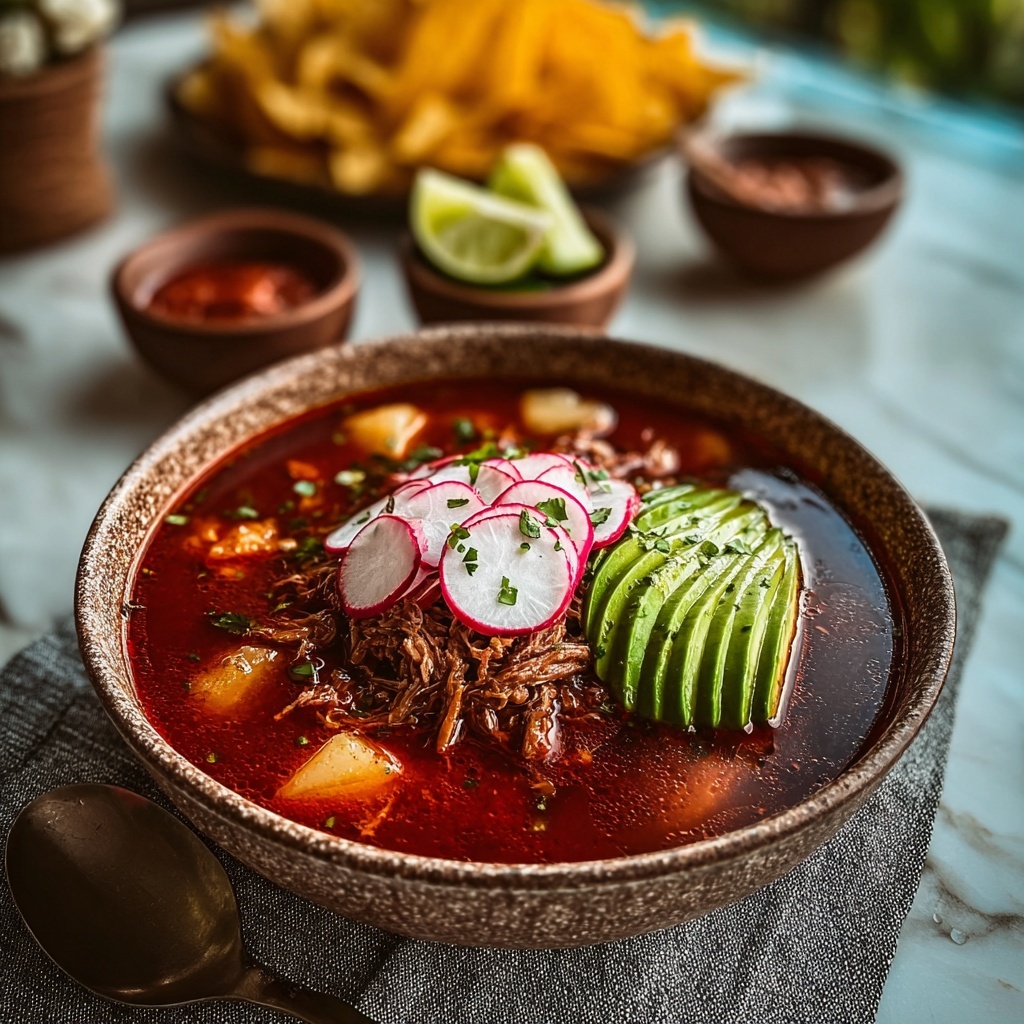
Gathering the ingredients for this Pozole Rojo Recipe is a breeze, and each one plays a crucial role in delivering that signature taste, texture, and rich red color. From the hearty pork shoulder to the soulful dried chiles and hominy, every component works together for a harmonious and satisfying stew.
- Pork shoulder: The foundation of the stew, providing tender meat and rich flavor after slow cooking.
- Hominy: Adds a chewy, slightly nutty texture that’s essential to pozole’s character.
- Guajillo chiles: These dried red chiles bring smoky flavor and beautiful vibrant color.
- Ancho chiles: Complement the guajillos with mild heat and a deep fruity sweetness.
- Garlic cloves: Used both in the broth and chile puree, these add layers of savory aroma.
- Onion: Sliced into halves, it enriches the broth with subtle sweetness and umami.
- Bay leaves: Infuse the stew with earthy, slightly floral notes.
- Mexican oregano: The herbaceous, slightly citrusy oregano is a must for authentic flavor.
- Chicken broth: Enhances the depth of the stew and keeps it hearty without overwhelming the pork’s natural flavor.
- Salt and pepper: Essential for balancing and enhancing all the flavors in your pozole.
- Water: Used as needed to cover the pork and control the stew’s consistency.
- Toppings: Shredded cabbage, sliced radishes, chopped onion, lime wedges, dried oregano, and tostadas or tortilla chips bring freshness and crunch to each serving.
How to Make Pozole Rojo Recipe
Step 1: Preparing the Pork Broth
Start by cutting the pork shoulder into large chunks and seasoning it with salt. Place the pork in a large stockpot along with half an onion, three garlic cloves, and two bay leaves, then cover with enough water. Gently simmer for about 1.5 hours until the pork is meltingly tender. Be sure to skim any foam that surfaces for a clear, clean broth that tastes pure and comforting.
Step 2: Toasting and Soaking the Chiles
While your pork cooks, focus on the chiles. Remove the stems and seeds from the dried guajillo and ancho chiles. Lightly toast them in a dry skillet about 30 seconds per side—the aromas that fill your kitchen will hint at the complexity they bring to this Pozole Rojo Recipe. After toasting, soak the chiles in hot water for 15 minutes to rehydrate and soften.
Step 3: Creating the Chile Puree
Drain the chiles, reserving some soaking liquid. Blend the chiles together with the remaining onion half, the last three garlic cloves, a teaspoon of Mexican oregano, and about a cup of the soaking liquid or pork broth until smooth. For a silkier texture, strain this puree before adding it to the stew, but it’s perfectly delicious either way.
Step 4: Combining the Ingredients
Remove the pork from the broth, shred it into bite-sized pieces, and return it to the pot. Stir in your chile puree, drained hominy, and chicken broth. Let everything simmer uncovered for 30 minutes so the flavors meld beautifully. Taste and adjust the seasoning with salt and pepper—the heart of your Pozole Rojo Recipe is in this final flavor balance.
Step 5: Final Touches
Once your stew is ready, it’s time to get creative with toppings and presentation. The next step is the best part—making it your own!
How to Serve Pozole Rojo Recipe
Garnishes
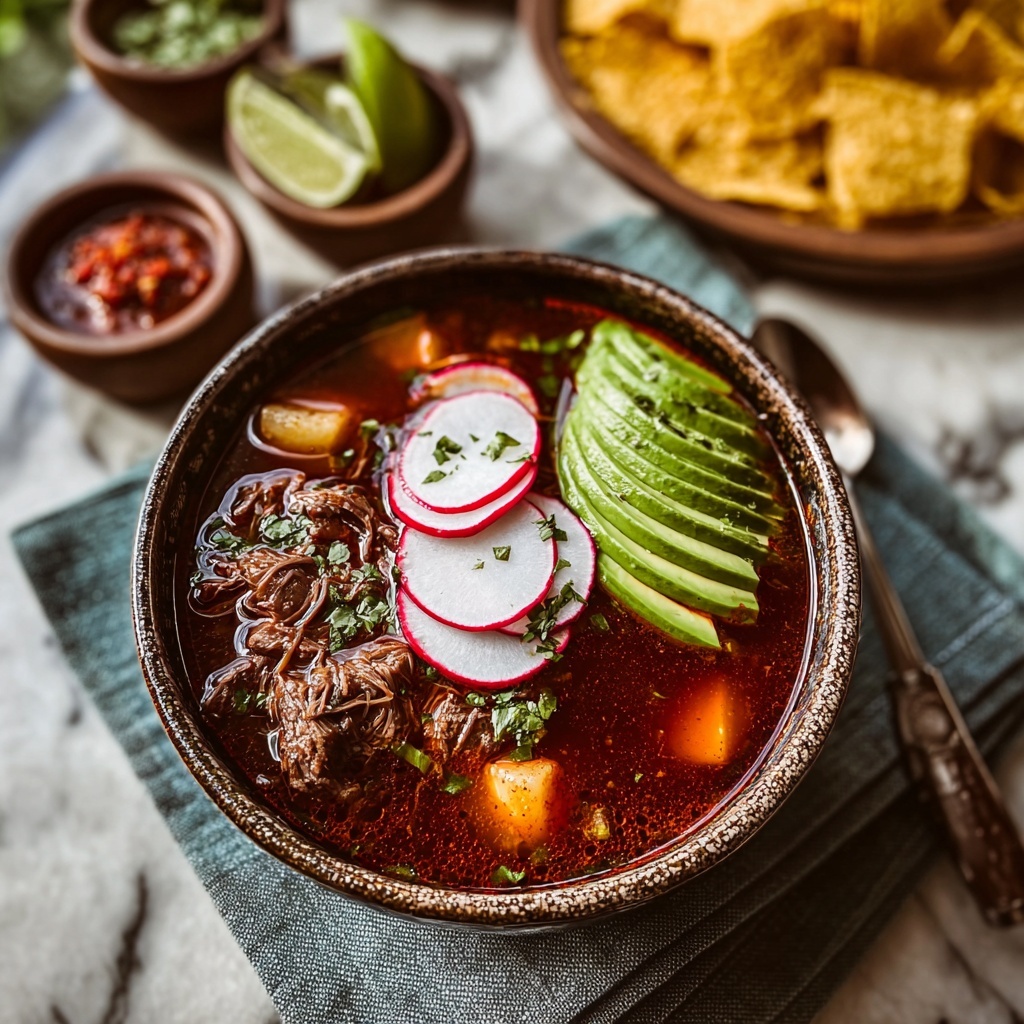
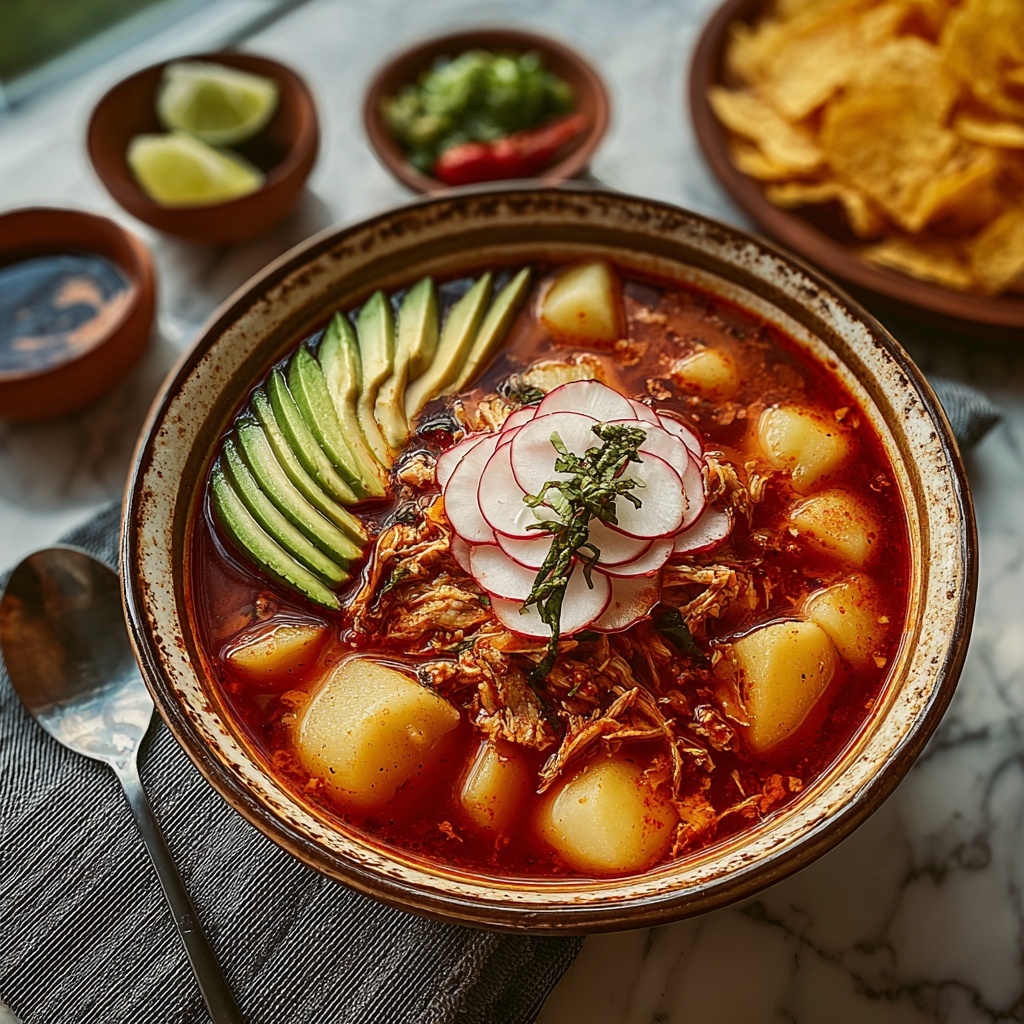
Traditional garnishes breathe fresh life into every spoonful. Shredded cabbage adds a crisp crunch, sliced radishes provide peppery brightness, and chopped onion offers sharpness. A squeeze of lime juice brightens the rich broth, while a sprinkle of dried oregano adds an extra herbaceous kick. These toppings transform each bowl into a vibrant, multi-textured experience.
Side Dishes
Serving your Pozole Rojo Recipe alongside warm tostadas or crunchy tortilla chips is a wonderful way to introduce contrasting textures. You might also enjoy it with simple sides like Mexican rice or refried beans to round out the meal with hearty, comforting notes.
Creative Ways to Present
For a festive presentation, consider creating a toppings bar with all the classic add-ons so everyone can customize their bowl. You can also serve the pozole in individual clay bowls for an authentic touch, adding lime wedges and a sprinkle of fresh cilantro for color and aroma that elevate the entire experience.
Make Ahead and Storage
Storing Leftovers
This Pozole Rojo Recipe tastes even better the next day, as the flavors continue to meld beautifully. Store leftovers in an airtight container in the refrigerator for up to 3 days. Make sure to cool the soup completely before sealing to keep the pork tender and the broth fresh.
Freezing
If you want to keep pozole on hand for longer, it freezes wonderfully. Place cooled pozole in freezer-safe containers, leaving some space for expansion. It can be frozen for up to 3 months without losing its rich flavor or texture. Just remember to freeze it without the fresh garnishes—they’re best added fresh upon serving.
Reheating
When you’re ready to enjoy your pozole again, gently reheat on the stove over medium-low heat, stirring occasionally. Add a splash of broth or water if it has thickened during storage. Top with fresh garnishes just before serving to preserve their delightful crunch and brightness.
FAQs
What type of hominy should I use for Pozole Rojo Recipe?
Canned hominy is the most convenient and widely used option, as it’s already pre-cooked and just needs to be drained before adding. If you prefer more control over texture, dried hominy can be used but requires soaking and longer cooking to soften.
Can I make this Pozole Rojo Recipe with chicken instead of pork?
Absolutely! Chicken can be a lighter alternative; just simmer bone-in chicken thighs or breasts until tender and adjust cooking times accordingly. The chile base and toppings remain the same, delivering that comforting, authentic flavor.
How spicy is this Pozole Rojo Recipe?
This recipe has mild to moderate heat thanks to the guajillo and ancho chiles, which are more smoky and fruity than fiery. If you want more spice, consider adding a pinch of cayenne or chopped jalapeños to taste.
Why do I need to strain the chile sauce?
Straining the chile sauce is optional but helps achieve a smooth, velvety broth without any bits of skin or seeds, giving your pozole a refined texture while keeping all the rich flavors intact.
Can I prepare the chile puree in advance?
Yes, you can make the chile puree a day ahead and keep it refrigerated in a sealed container. This makes your cooking process faster and allows the flavors to deepen even more when combined with the pork broth.
Final Thoughts
This Pozole Rojo Recipe is more than just a meal—it’s a beautiful way to bring warmth, tradition, and vibrant flavors to your table. Whether you’re celebrating a special occasion or just want a hearty, satisfying dish for any day, this recipe invites you to slow down and savor every delicious moment. Give it a try, and I promise it will quickly become one of your all-time favorites!
Print
Pozole Rojo Recipe
- Prep Time: 30 minutes
- Cook Time: 2 hours 10 minutes
- Total Time: 2 hours 40 minutes
- Yield: 6 servings
- Category: Soup/Stew
- Method: Stovetop
- Cuisine: Mexican
Description
Pozole Rojo is a traditional Mexican stew featuring tender pork shoulder simmered with dried guajillo and ancho chiles, hominy, and a blend of spices. This hearty and flavorful dish is perfect for family gatherings and celebrations, served with fresh toppings like shredded cabbage, radishes, lime, and tostadas for added crunch and zest.
Ingredients
Main Ingredients
- 2 pounds pork shoulder, cut into large chunks
- 2 (15 oz) cans hominy, drained
- 4 dried guajillo chiles
- 2 dried ancho chiles
- 6 garlic cloves, divided
- 1 onion, halved
- 2 bay leaves
- 1 teaspoon Mexican oregano
- 4 cups chicken broth
- Salt, to taste
- Pepper, to taste
- Water, as needed
Toppings
- Shredded cabbage
- Sliced radishes
- Chopped onion
- Lime wedges
- Dried oregano
- Tostadas or tortilla chips
Instructions
- Prepare the pork broth: Season the pork shoulder chunks with salt. Place them in a large stockpot along with half an onion, 3 garlic cloves, 2 bay leaves, and enough water to cover the meat. Bring to a simmer and cook for 1.5 hours until the pork is very tender. Occasionally skim off any foam that rises to the surface to keep the broth clear.
- Prepare the chiles: Remove the stems and seeds from the guajillo and ancho chiles. Lightly toast them in a dry skillet for about 30 seconds on each side until they become fragrant. Then soak the toasted chiles in hot water for 15 minutes to soften.
- Make the chile puree: In a blender, combine the soaked chiles, 3 garlic cloves, the remaining half onion, Mexican oregano, and 1 cup of the soaking liquid or pork broth. Blend until smooth. Optionally, strain the puree to remove any remaining solids for a smoother texture.
- Combine and simmer: Shred the cooked pork and return it to the pot. Add the chile puree, drained hominy, and chicken broth to the pot. Simmer uncovered for an additional 30 minutes to allow flavors to meld. Taste and adjust salt and pepper as needed.
- Serve: Ladle the hot pozole rojo into bowls and offer toppings such as shredded cabbage, sliced radishes, chopped onion, lime wedges, and dried oregano. Serve with tostadas or tortilla chips on the side for added texture and flavor.
Notes
- Toast chiles gently to avoid burning, which can make the stew bitter.
- Hominy can be found canned or dried; if using dried, soak and cook it as per package instructions before adding.
- For a richer broth, you can use homemade chicken broth instead of store-bought.
- Adjust the spiciness by varying the amount or type of chiles used.
- Pozole is often better the next day as flavors deepen overnight.